
Description
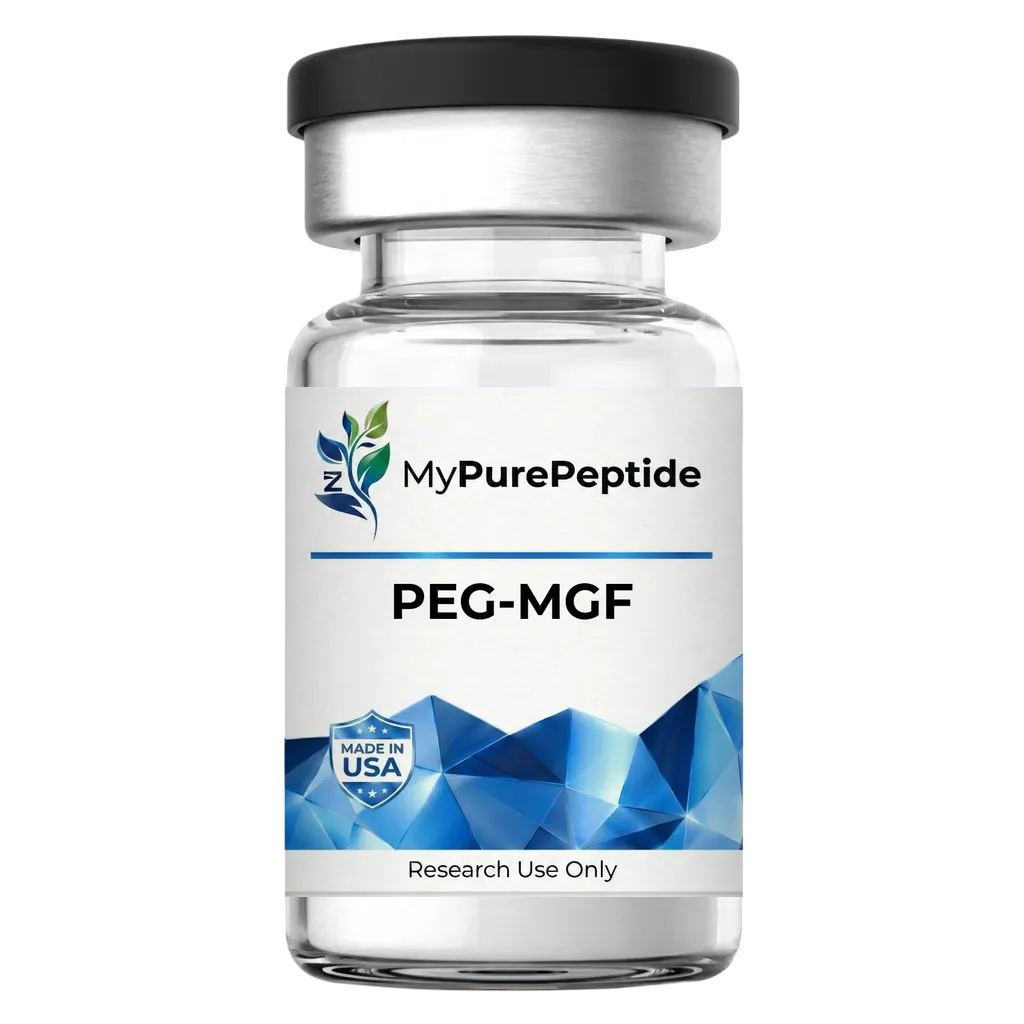
PEG-MGF 2 mg — PEGylated Mechano Growth Factor Analog for Muscle & Repair Research
PEG-MGF is a pegylated analog of Mechano Growth Factor (MGF), an
IGF-1 splice-variant peptide that has been investigated in preclinical models for roles in
muscle repair, local growth responses, and tissue remodeling after mechanical or injury
stress. PEGylation (polyethylene glycol attachment) is used to extend circulation time
and modify peptide pharmacokinetics in research settings.
What It Is
- Class: PEGylated IGF-1 splice-variant peptide analog
- Origin concept: Based on the E-domain sequence of IGF-1
(Mechano Growth Factor), which is upregulated in muscle after mechanical overload or injury
in animal models. - Modification: Conjugation to polyethylene glycol (PEG) to prolong
stability and exposure compared with non-PEGylated MGF peptides.
Proposed Mechanisms (Preclinical)
Muscle & Satellite-Cell Biology
- Investigated for effects on muscle satellite cells, including activation,
proliferation, and differentiation in response to overload or injury. - Explored for support of muscle fiber repair and local growth signals
in mechanically stressed tissue. - Model-dependent influences on markers of protein synthesis, myogenic factors,
and structural remodeling.
PEGylation & Pharmacokinetics
- PEGylation is used to extend peptide half-life and reduce rapid
degradation/clearance in vivo. - Prolonged exposure vs. non-PEG MGF may change the time course and magnitude
of signaling at target tissues. - Part of broader research into PEGylated peptide therapeutics and depot-like
delivery profiles.
Selected Research Highlights
- Muscle-Injury Models: MGF-type peptides have been studied in rodent models
of mechanical or toxin-induced muscle damage for effects on regeneration and functional
recovery. - Overload & Hypertrophy: IGF-1 splice variants including MGF are
reported to be upregulated in mechanically loaded muscle; analogs like PEG-MGF are used to
probe these pathways experimentally. - Tissue Repair & Remodeling: Experimental work has evaluated MGF-like
peptides in broader contexts of tissue remodeling, angiogenesis, and structural adaptation
following stress.
Chemical & Handling Information
- Type: PEGylated peptide analog of Mechano Growth Factor
- Backbone: IGF-1 E-domain–derived peptide sequence with PEG attachment
(exact PEG size and linkage may vary by lot/specification) - Appearance: White to off-white lyophilized powder
Specifications
- Peptide: PEG-MGF
- Amount: 2 mg per vial
- Form: Lyophilized powder
- Purity: ?99% (HPLC); COA per lot available
- Packaging: Sealed vials suitable for standard laboratory handling
Storage & Stability
- Store lyophilized vials in a cool, dry place, protected from light.
- Refrigeration or freezing of the lyophilized peptide is recommended for extended stability,
according to laboratory SOPs. - After reconstitution, store at 2–8 °C for short-term use.
- For long-term storage, aliquot and freeze at ?20 °C or below; avoid repeated freeze–thaw cycles.
Reviews
There are no reviews yet.