Description
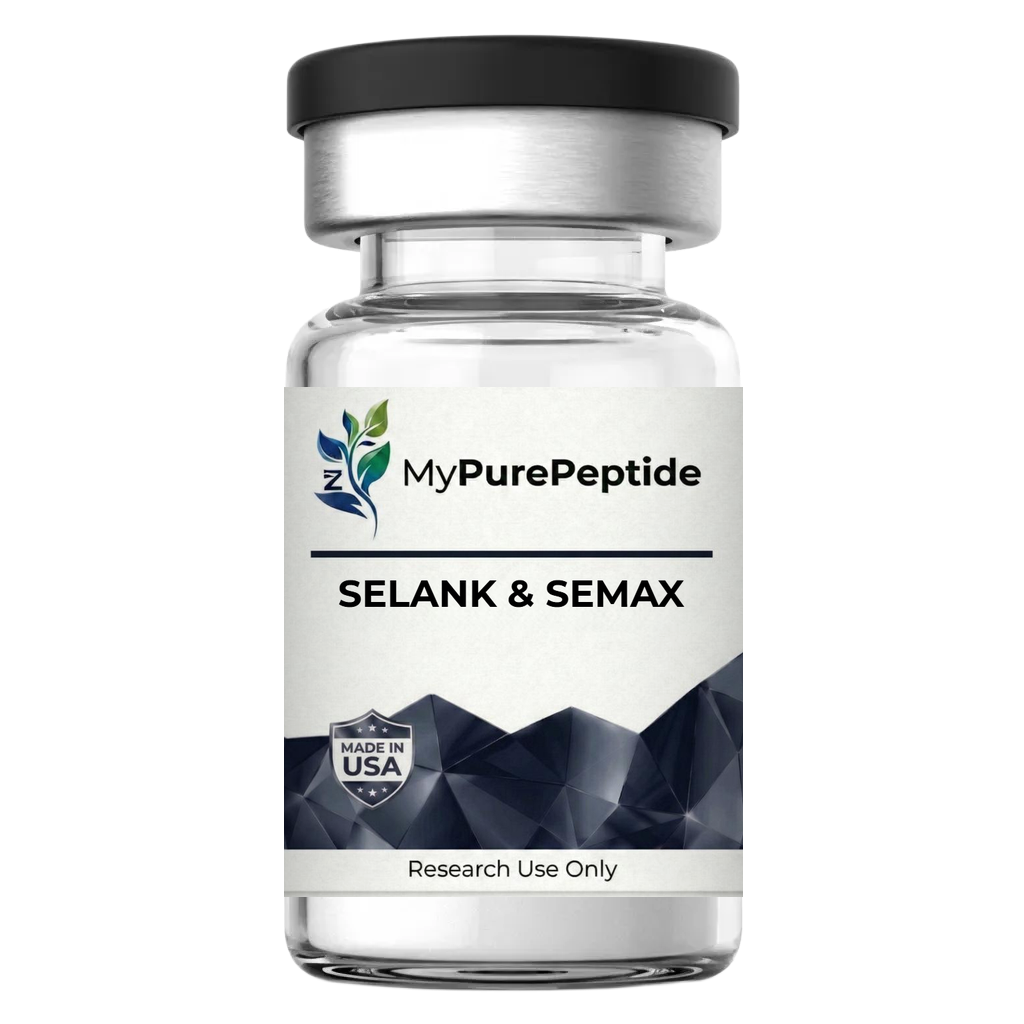
Selank 10 mg + Semax 10 mg Blend — Neuroactive Peptides for Nootropic & Stress-Response Research
Selank (a synthetic heptapeptide related to the endogenous immunopeptide tuftsin) and
Semax (a synthetic heptapeptide analog derived from ACTH fragments) are widely used in
preclinical and exploratory human research focused on neuromodulation, cognitive performance markers,
stress signaling, and neurotrophic pathways. As a combined preparation, the blend is commonly used in research
settings to explore overlapping effects on anxiety-like behavior, attention/memory readouts, and neurochemical signaling.
What It Is
- Class: Synthetic neuroactive peptide blend (heptapeptides)
- Core research roles: Experimental tools for studying neurotransmitter systems, neurotrophic signaling, stress adaptation, and inflammatory/immune signaling cross-talk.
- Research focus: Behavioral paradigms (anxiety, learning/memory), neurotrophins (e.g., BDNF-related pathways), oxidative-stress models, and neuromodulatory balance.
Proposed Mechanisms & Pathways (Preclinical)
Neuromodulation & Cognitive Signaling
- Investigated for effects on GABAergic and monoaminergic signaling in models assessing stress reactivity, attention, and memory-related outcomes.
- Explored for influence on synaptic plasticity markers and neurotrophic-factor pathways (commonly studied via gene-expression/protein readouts in brain tissue and cell systems).
- Used in research probing learning and memory endpoints (maze performance, conditioning paradigms, and cognitive task readouts in animal models).
Stress Response, Neuroprotection & Immune Cross-Talk
- Studied in models of stress and anxiety-like behavior where peptide signaling may modulate adaptive responses.
- Explored in experimental paradigms of oxidative stress and neuroinflammation with downstream effects on cellular resilience markers.
- Selank is additionally researched for immune-modulatory signaling (immunopeptide lineage), while Semax is frequently studied in neuroprotection-focused model systems.
Selected Research Highlights
- Anxiety & Stress Models: Frequently used in behavioral research to probe anxiety-like readouts and stress adaptation under controlled experimental conditions.
- Cognition & Performance Readouts: Studied in learning/memory paradigms, with investigators tracking behavioral outcomes alongside neurochemical or transcriptional markers.
- Neurotrophic Pathways: Commonly evaluated in research measuring changes in neurotrophin-related signaling associated with plasticity and resilience.
- Inflammation/Oxidative Stress: Used in exploratory studies assessing inflammatory mediators and oxidative-stress markers in neural and peripheral models.
Chemical & Handling Information
- Type: Lyophilized peptide blend (Selank + Semax)
- Peptide details (reference):
- Selank: Thr-Lys-Pro-Arg-Pro-Gly-Pro (heptapeptide)
- Semax: Met-Glu-His-Phe-Pro-Gly-Pro (heptapeptide)
- Appearance: White to off-white lyophilized powder (handle promptly; minimize moisture exposure)
- General handling: Protect from excessive heat, light, and repeated temperature cycling.
Specifications
- Compound: Selank + Semax blend
- Amount: 20 mg total per vial (Selank 10 mg + Semax 10 mg)
- Form: Lyophilized powder
- Purity: ?99% (HPLC); COA per lot available
- Packaging: Sealed vials suitable for standard laboratory handling
Storage & Stability
- Store lyophilized vials in a cool, dry place, protected from light and moisture.
- Refrigeration or freezing of the lyophilized material is recommended for extended stability, according to laboratory SOPs.
- After reconstitution, store at 2–8 °C for short-term use.
- For longer-term storage, aliquot and freeze at ?20 °C or below; avoid repeated freeze–thaw cycles.
Research use only. Not for human or veterinary use. For blended Selank + Semax research vials, visit
MyPurePeptide.com.
Reviews
There are no reviews yet.