Description
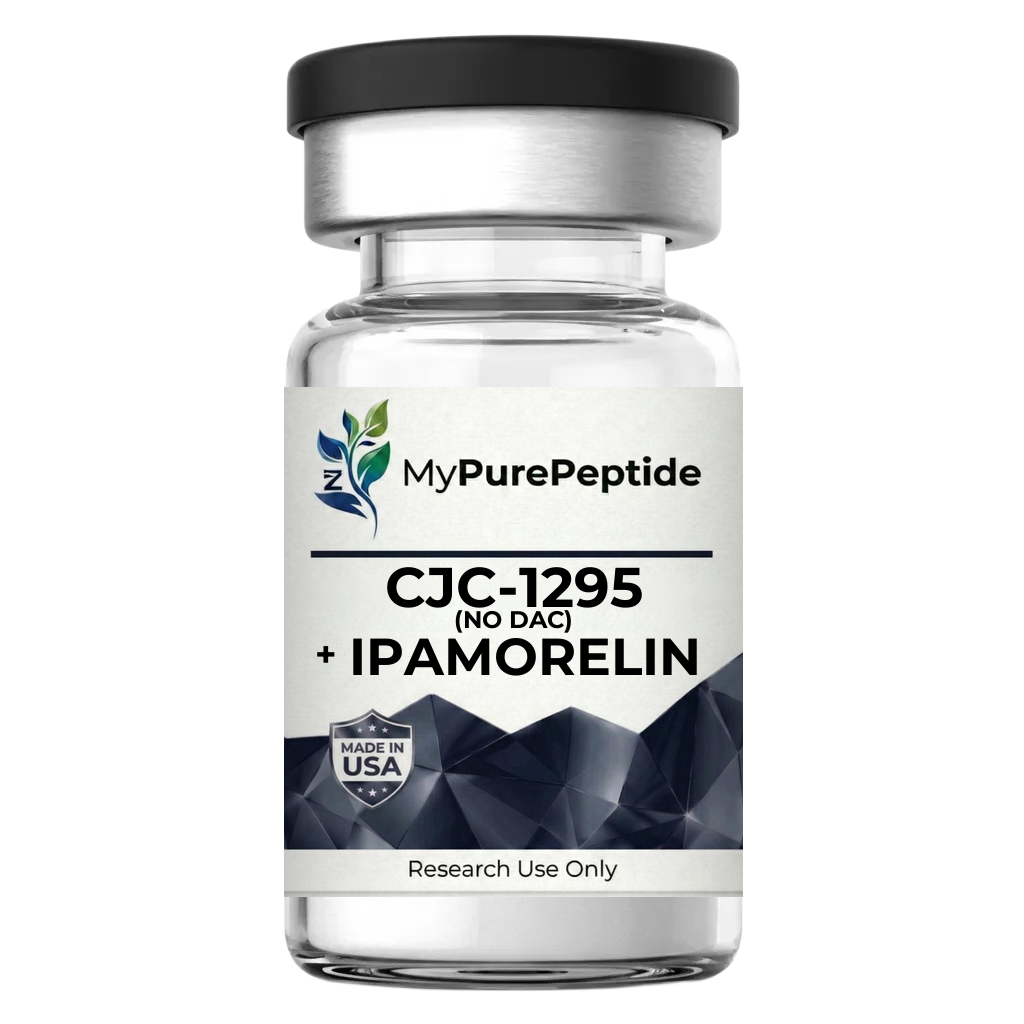
CJC-1295 (no DAC) + Ipamorelin — Dual GH Secretagogue Blend for Research (10 mg Total)
CJC-1295 (no DAC) + Ipamorelin is a two-peptide research blend combining a
GHRH analog (CJC-1295 no DAC) with a GHRP/ghrelin-receptor agonist (Ipamorelin).
This “stack” format is widely used in laboratory settings to investigate pulsatile growth hormone (GH) release,
GH/IGF-1–linked signaling, and endocrine rhythm dynamics. The “no DAC” designation indicates the
CJC component does not include the drug-affinity complex (DAC) motif, supporting shorter, more physiologic exposure patterns
compared to long-acting DAC-modified variants.
What It Is
- Class: Dual growth hormone secretagogue research blend (GHRH analog + GHRP)
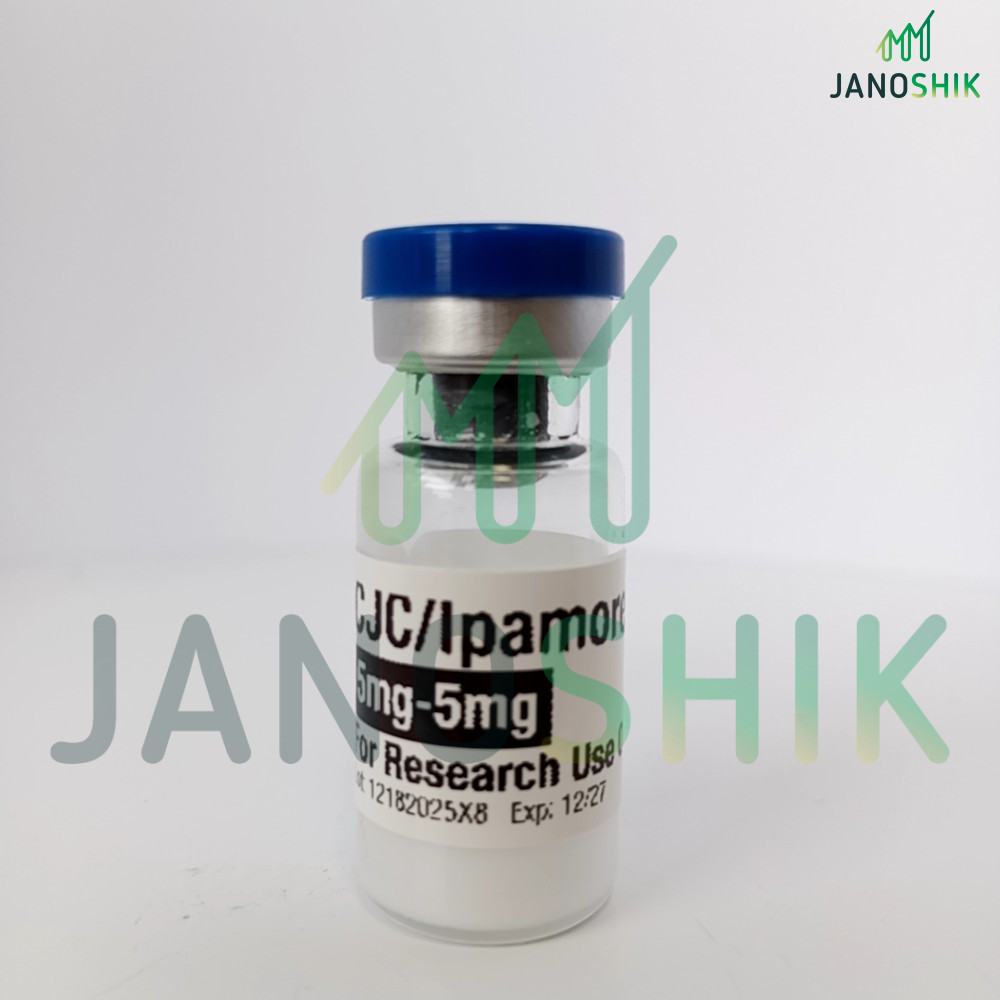
- Components: 5mg CJC-1295 (no DAC), 5mg Ipamorelin
- Concept: Multi-receptor experimental design targeting GH release via complementary pathways
to model pulse amplitude, frequency, and downstream endocrine markers
Proposed Mechanisms (Preclinical)
CJC-1295 (no DAC): GHRH Pathway
- Binds to GHRH receptors on pituitary somatotroph cells.
- Activates Gs/cAMP/PKA signaling linked to GH secretion.
- Used to study pulsatile GH release and IGF-1–associated signaling in research models.
- Non-DAC variant is explored for shorter-duration receptor engagement versus extended-exposure formulations.
Ipamorelin: Ghrelin (GHSR) Pathway
- Acts as a GHRP by interacting with the growth hormone secretagogue receptor (GHSR).
- Investigated for its ability to stimulate GH release through ghrelin-mimetic signaling pathways.
- Often selected in research for relatively “clean” GH pulse modeling compared with broader secretagogues
(study- and model-dependent).
Combined Signaling: Dual-Pathway Pulse Modeling
- Combination protocols are used to explore synergistic GH pulse augmentation via
simultaneous GHRH + GHRP pathway engagement. - Supports experimental designs comparing pulse amplitude, pulse frequency,
and IGF-1 response across single-agent vs blended conditions. - Frequently used in endocrine rhythm and body-composition research models as an exploratory peptide stack.
Selected Research Highlights
- Pulsatile GH Research: Dual secretagogue designs are commonly used to study how distinct receptor systems
shape GH pulse dynamics and timing. - GH/IGF-1 Signaling: Investigated for effects on endocrine markers tied to GH release and
downstream IGF-1–linked pathways in preclinical settings. - Comparative Exposure Modeling: Non-DAC CJC variants are often used to evaluate shorter, transient receptor engagement
relative to long-acting depot strategies. - Stack vs Single-Agent Designs: Common experimental approach: compare CJC-only, Ipamorelin-only, and combination conditions
to assess pulse characteristics and model-dependent metabolic endpoints.
Chemical & Handling Information
- Type: Synthetic research peptide blend (GHRH analog + GHRP)
- Peptide length: CJC-1295 (no DAC) ~30 amino acids (sequence-variant dependent); Ipamorelin is a short pentapeptide
- Appearance: White to off-white lyophilized powder
Specifications
- Peptide: CJC-1295 (no DAC) + Ipamorelin
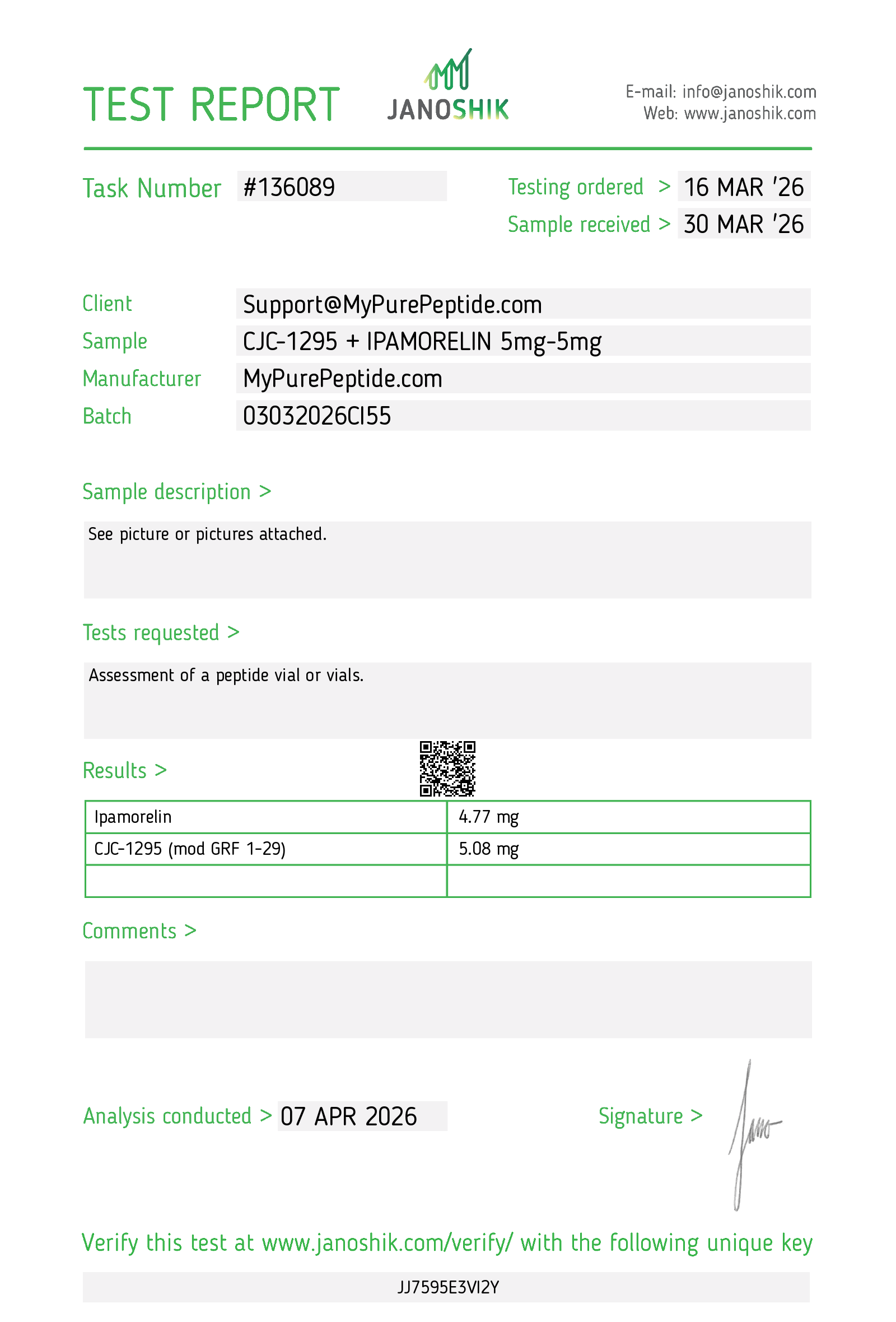
- Amount: 10 mg total per vial (5 mg CJC-1295 no DAC + 5 mg Ipamorelin)
- Form: Lyophilized powder
- Purity: ?99% (HPLC); COA per lot available
- Packaging: Sealed vials suitable for standard laboratory handling
Storage & Stability
- Store lyophilized vials in a cool, dry place, protected from light.
- For extended stability, keep vials refrigerated or frozen as per laboratory SOPs.
- After reconstitution, store at 2–8 °C for short-term use.
- For long-term storage, aliquot and freeze at ?20 °C or below; avoid repeated freeze–thaw cycles.


Reviews
There are no reviews yet.