Description
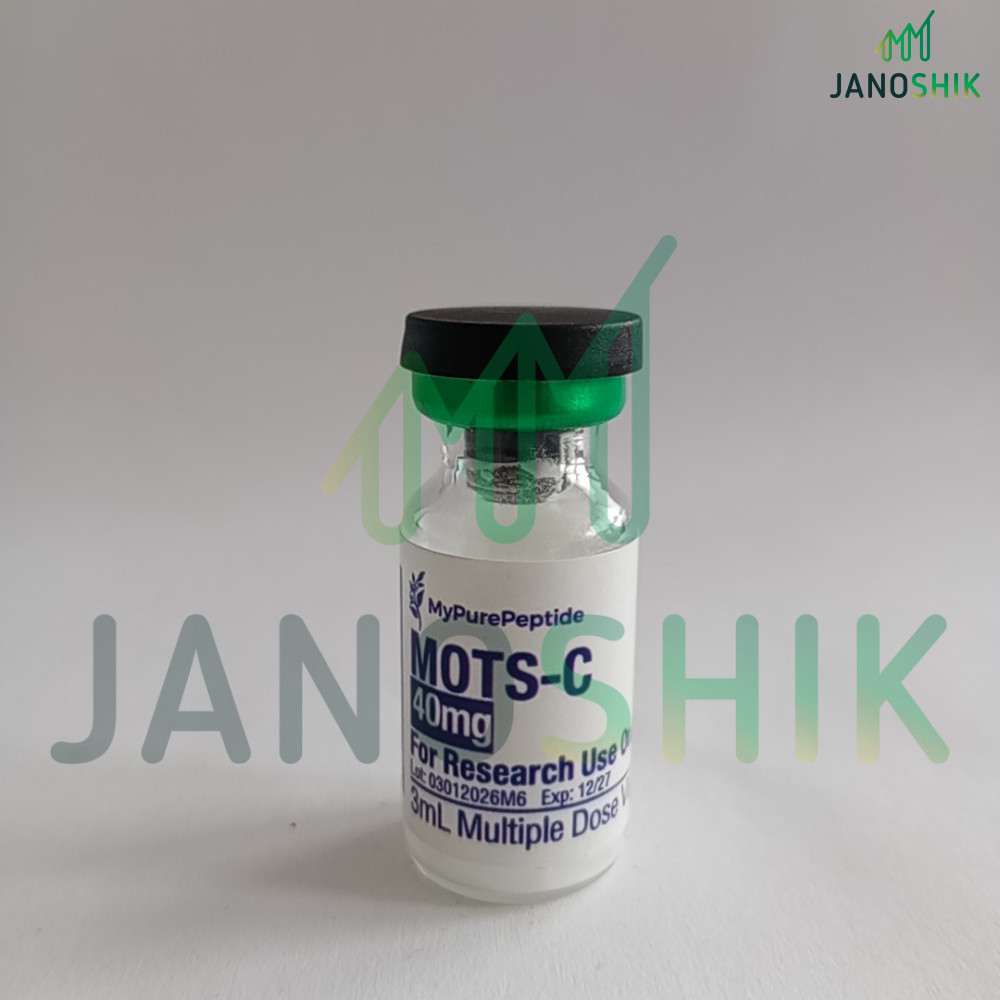
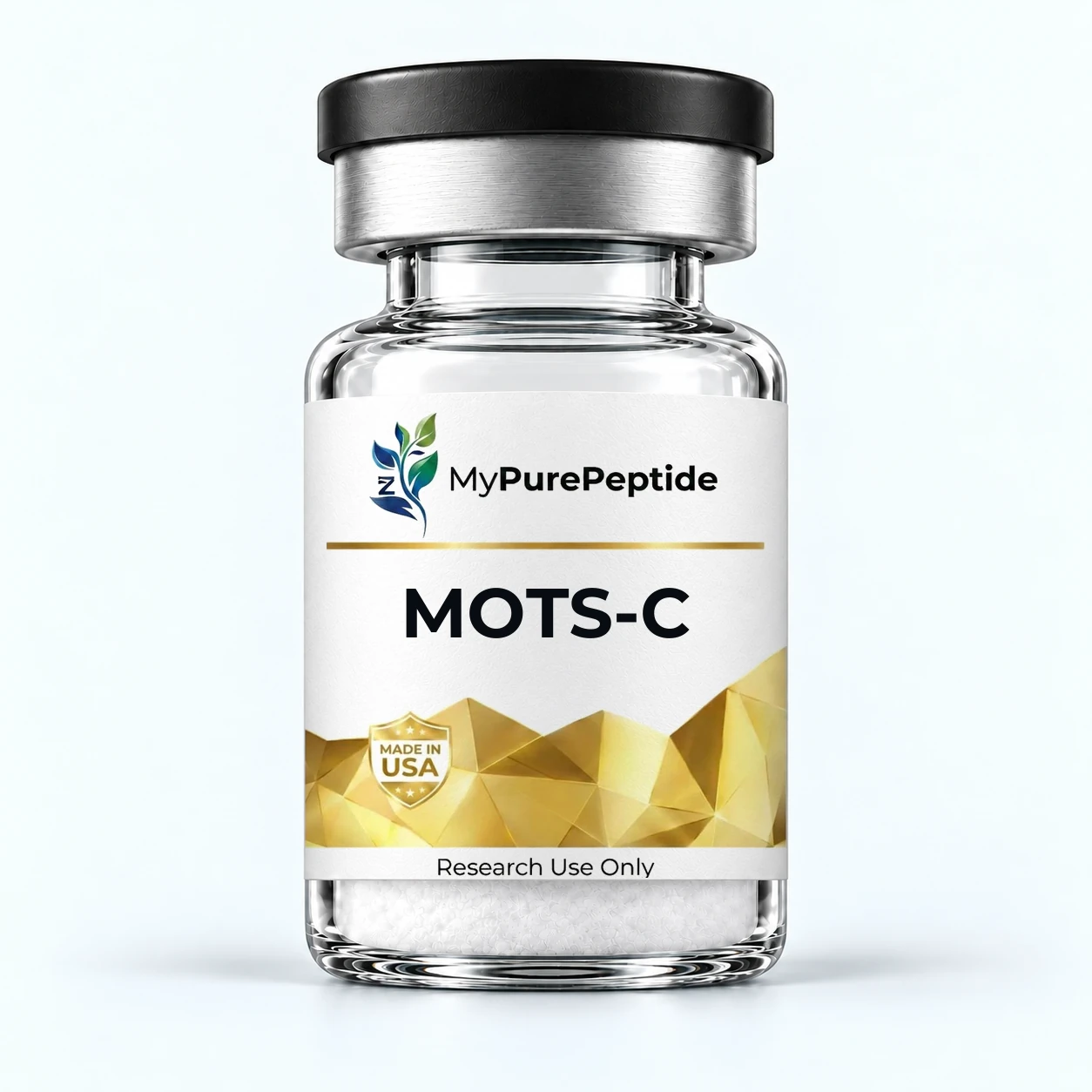
MOTS-c 40 mg — Mitochondrial-Derived Peptide for Metabolic Research
MOTS-c (Mitochondrial Open Reading Frame of the 12S rRNA type-c) is a
16–amino-acid mitochondrial-derived peptide (MDP) that has been investigated in preclinical
and early human research for roles in cellular energy sensing, metabolic stress
adaptation, and exercise-like signaling. Unlike many nuclear-encoded peptides, MOTS-c
is encoded within mitochondrial DNA, adding interest to its role in the mito–nuclear
communication axis.
What It Is
- Class: Mitochondrial-derived peptide (MDP)
- Origin concept: Encoded by an open reading frame within the mitochondrial
12S rRNA region; translated peptide has been detected in multiple tissues and circulation
in research settings. - Research focus: Cellular stress responses, AMPK-linked signaling, and
metabolic regulation under nutrient and exercise challenges.
Proposed Mechanisms (Preclinical)
Metabolic & Stress-Sensing Pathways
- Explored for activation of AMP-activated protein kinase (AMPK)
and related energy-sensing cascades. - Investigated for effects on glucose utilization and
insulin-sensitivity markers in cell and animal models. - Model-dependent modulation of genes involved in fatty-acid oxidation,
oxidative stress, and inflammatory balance.
Exercise, Aging & Mitochondrial Signaling
- Preclinical data suggest exercise-mimetic–like patterns of
gene expression and metabolic adaptation in select tissues. - Studied in aging models for potential impacts on metabolic resilience,
physical performance, and body-composition markers. - Part of a broader research interest in mitochondrial peptides (MDPs) as
retrograde signals from mitochondria to nucleus.
Selected Research Highlights
- Glucose & Insulin Models: MOTS-c has been examined in rodent and
cell-culture models of diet-induced obesity and insulin resistance for effects on glucose
handling and insulin sensitivity. - Exercise & Performance: Animal studies report changes in exercise
capacity, endurance, and skeletal-muscle markers consistent with improved metabolic
flexibility. - Aging & Longevity Research: As an MDP, MOTS-c has been included in
exploratory work on healthy aging, stress resistance, and mitochondrial signaling networks. - Inflammation & Oxidative Stress: Experimental data suggest shifts in
oxidative-stress and inflammatory markers under metabolic or environmental stressors.
Chemical & Handling Information
- Type: Synthetic mitochondrial-derived peptide analog
- Peptide length: 16 amino acids (sequence may vary by vendor/lot specifications)
- Appearance: White to off-white lyophilized powder
Specifications
- Peptide: MOTS-c
- Amount: 40 mg per vial
- Form: Lyophilized powder
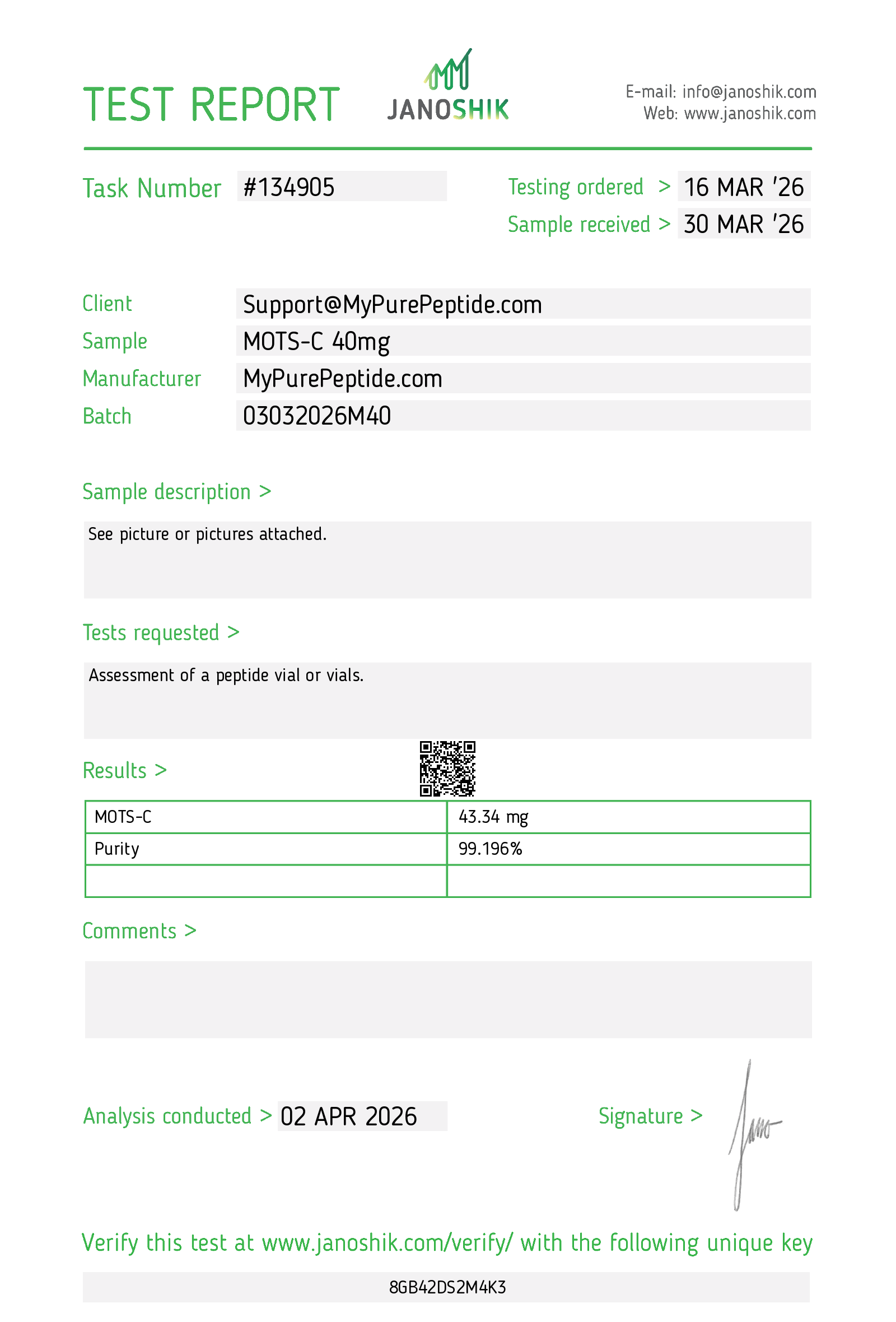
- Purity: ?99% (HPLC); COA per lot available
- Packaging: Sealed vials suitable for standard laboratory handling
Storage & Stability
- Store lyophilized vials in a cool, dry place, protected from light.
- For extended stability, refrigeration or freezing of the lyophilized peptide is recommended per laboratory SOPs.
- After reconstitution, store at 2–8 °C for short-term use.
- For long-term storage, aliquot and freeze at ?20 °C or below; avoid repeated freeze–thaw cycles.


Reviews
There are no reviews yet.