Description
Glutathione 1500 mg — Reduced L-Glutathione for Redox & Oxidative-Stress Research
Glutathione (L-?-glutamyl-L-cysteinylglycine; commonly supplied as the reduced form, GSH) is a major
intracellular thiol antioxidant involved in cellular redox balance, detoxification pathways, and oxidative-stress defense.
In preclinical and human research, glutathione and related redox systems are studied for roles in antioxidant capacity,
mitochondrial health, inflammation signaling, and cellular resilience under oxidative challenge.
What It Is
- Class: Endogenous tripeptide antioxidant (thiol-based redox buffer)
- Core roles: Maintains cellular redox homeostasis; cofactor/substrate in detoxification reactions; supports redox-dependent enzyme systems.
- Research focus: Oxidative-stress models, inflammatory signaling, mitochondrial function readouts, and glutathione-dependent enzymatic pathways.
Proposed Mechanisms & Pathways (Preclinical)
Redox Cycling & Antioxidant Defense
- Central to GSH/GSSG redox cycling, a key cellular buffer system used as a readout of oxidative status in research settings.
- Acts as an electron donor in reactions that neutralize reactive oxygen species (ROS) and lipid peroxides via glutathione-dependent enzymes.
- Used in studies measuring total glutathione, GSH:GSSG ratios, and antioxidant capacity across tissues and cell systems.
Detoxification, Inflammation & Cellular Resilience
- Serves as a substrate for glutathione S-transferases (GSTs) in xenobiotic and electrophile detoxification research paradigms.
- Explored in models of inflammation and oxidative injury where redox state can modulate signaling pathways and stress-response markers.
- Part of broader research into thiol metabolism and redox-regulated gene expression (e.g., Nrf2-linked antioxidant response networks in study-dependent contexts).
Selected Research Highlights
- Oxidative Stress Readouts: GSH levels, total glutathione, and GSH/GSSG ratios are widely used endpoints in studies of oxidative burden and antioxidant defenses.
- Mitochondrial Health: Glutathione status is frequently measured in mitochondrial and cellular bioenergetics research as oxidative stress can impact respiration and membrane integrity.
- Detoxification Pathways: Glutathione is central to conjugation reactions studied in toxicology and xenobiotic-metabolism models.
- Inflammation Models: Investigated in research exploring redox-sensitive inflammatory signaling and cellular stress responses under challenge conditions.
Chemical & Handling Information
- Type: L-Glutathione (commonly supplied as reduced glutathione, GSH)
- Class: Tripeptide (thiol antioxidant)
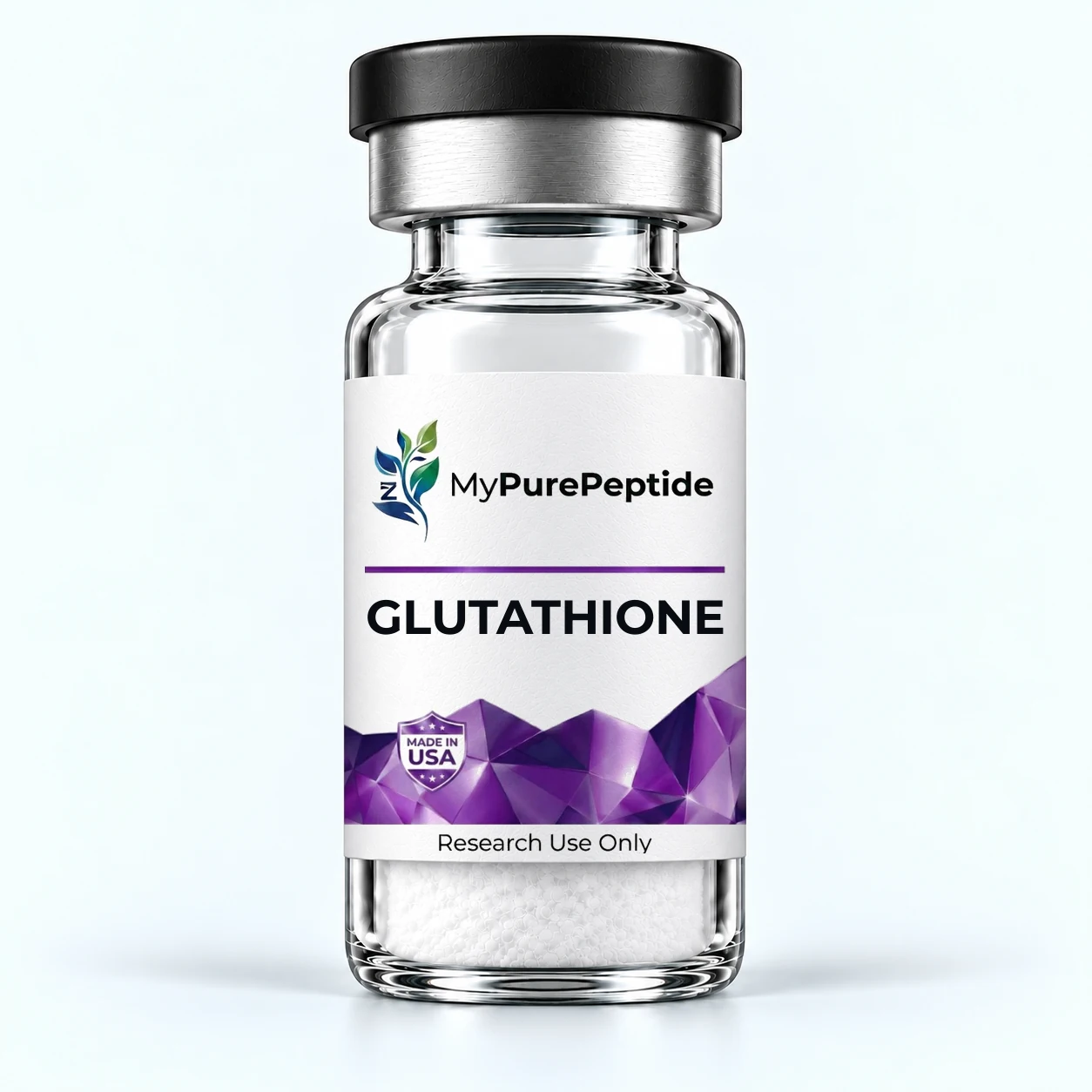
- Appearance: White to off-white lyophilized powder (hygroscopic; handle promptly)
Specifications
- Compound: Glutathione (L-glutathione; reduced form reference: GSH)
- Amount: 1500 mg per vial
- Form: Lyophilized powder
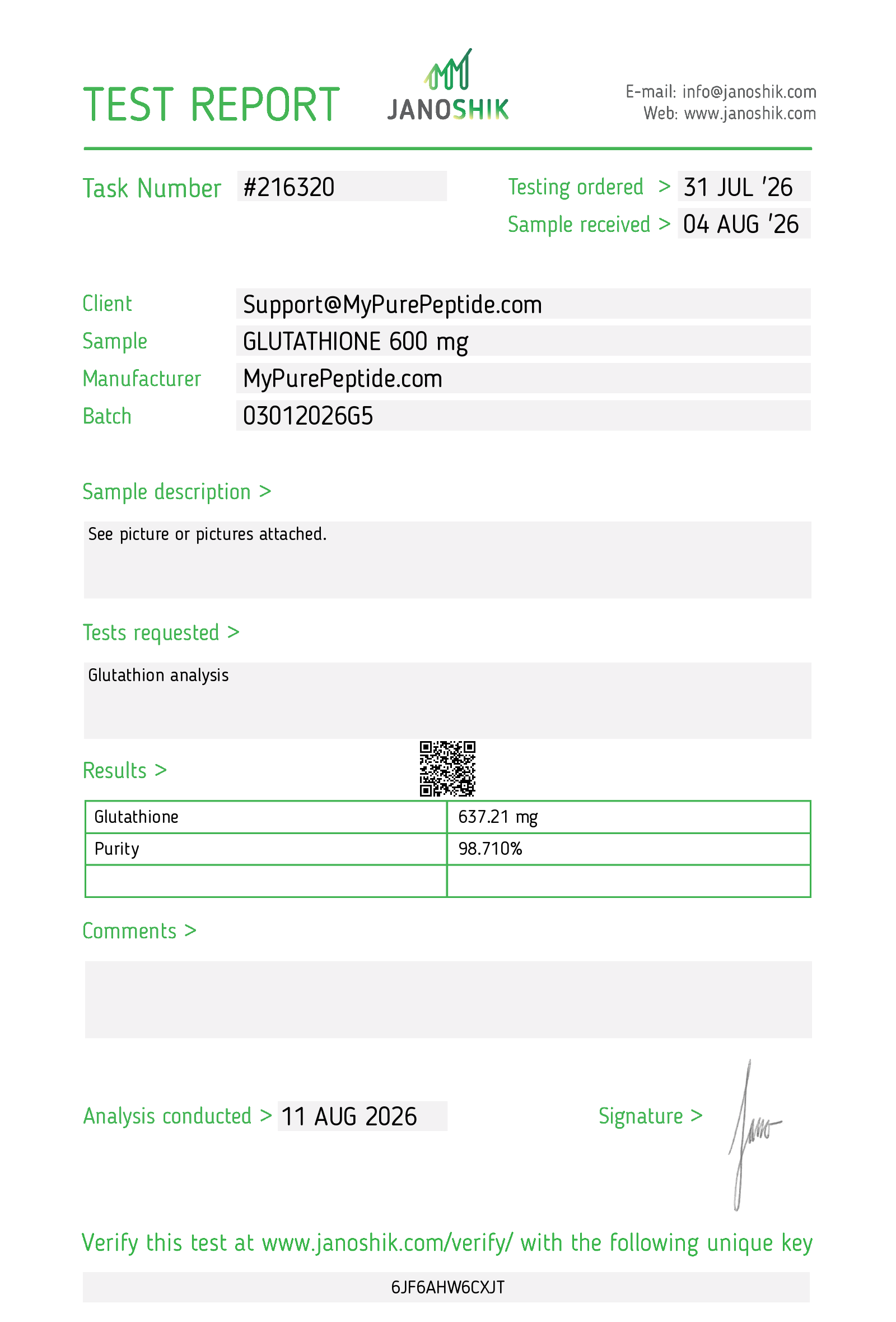
- Purity: ?99% (HPLC); COA per lot available
- Packaging: Sealed vials suitable for standard laboratory handling
Storage & Stability
- Store lyophilized vials in a cool, dry place, protected from light and moisture.
- Refrigeration or freezing of the lyophilized material is recommended for extended stability, according to laboratory SOPs.
- After reconstitution, store at 2–8 °C for short-term use.
- For longer-term storage, aliquot and freeze at ?20 °C or below; avoid repeated freeze–thaw cycles.


Reviews
There are no reviews yet.