Description
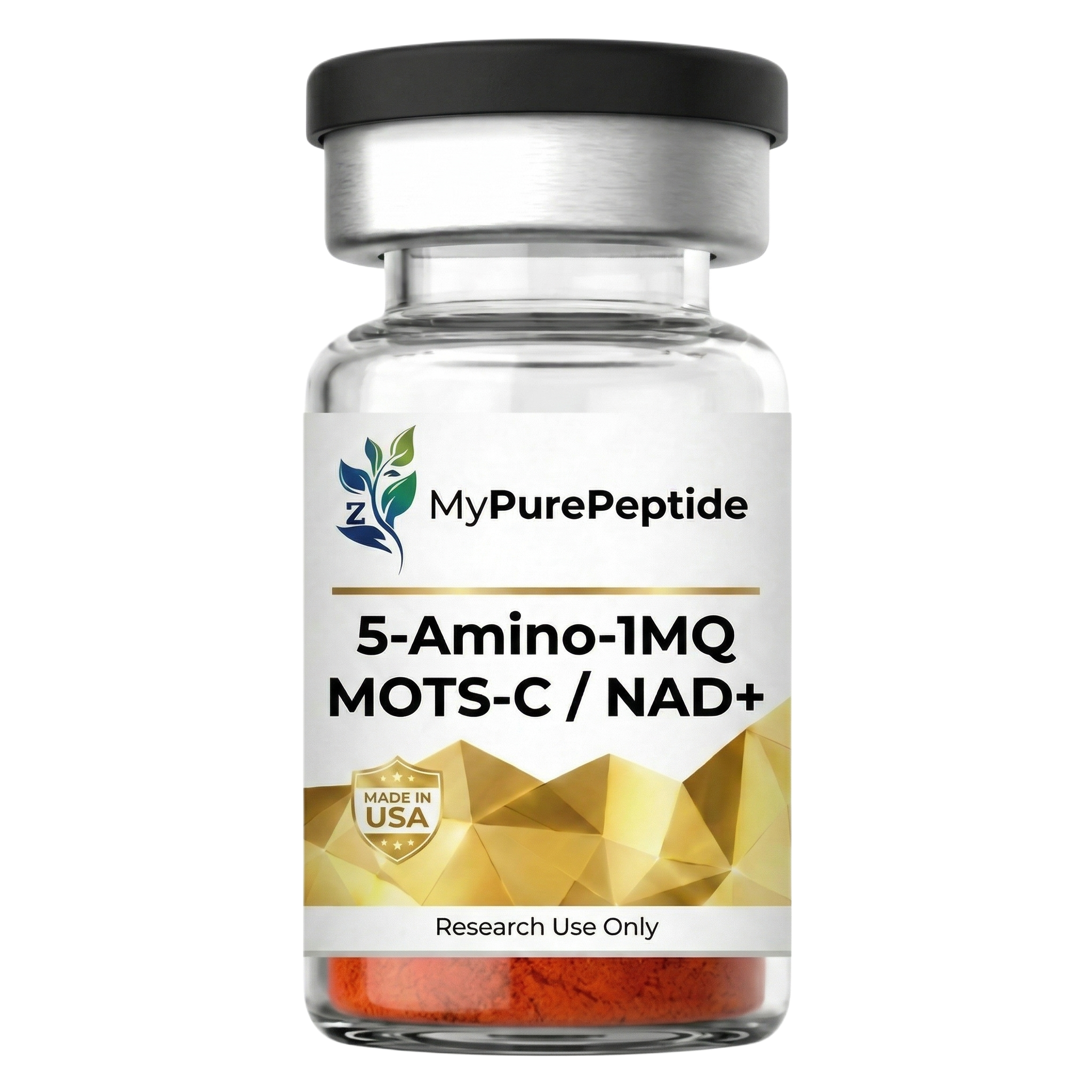
NAD+ 100 mg / MOTS-C 10 mg / 5-Amino-1MQ 10 mg Blend — Multi-Pathway Metabolic Research Complex
NAD+, MOTS-C, and 5-Amino-1MQ are studied in
experimental settings for their potential relevance to cellular energy metabolism,
mitochondrial signaling, and metabolic-stress pathways.
This research blend combines a NAD+-associated coenzyme component, a
mitochondria-derived peptide, and an NNMT-pathway small-molecule analog into
a single laboratory formulation for investigational use.
What It Is
- Class: Multi-compound metabolic research blend
- Primary pathways: NAD+-linked cellular energy systems, mitochondrial stress signaling, and NNMT-associated metabolic biochemistry
- Research focus: Mitochondrial function, energy balance, metabolic resilience, and adiposity-related endpoints in preclinical models
Proposed Mechanisms (Preclinical)
NAD+ & Cellular Energy Support
- NAD+ is a core coenzyme involved in redox reactions, mitochondrial respiration, and energy-transfer pathways in cells.
- Preclinical work examines its role in cellular repair processes, metabolic efficiency, and stress-response signaling.
- Investigational interest includes relationships to oxidative metabolism, sirtuin-linked pathways, and age-related bioenergetic decline.
Mitochondrial Signaling & Metabolic Regulation
- MOTS-C is a mitochondria-derived peptide studied for effects on metabolic homeostasis, glucose utilization, and exercise-related signaling.
- 5-Amino-1MQ has been explored for modulation of NNMT-related pathways connected to nicotinamide metabolism and adiposity research.
- Together, these pathways are of interest in models evaluating energy expenditure, mitochondrial stress adaptation, and body-composition endpoints.
Selected Research Highlights
- NAD+ Biology: Studied extensively in relation to mitochondrial function, cellular energy transfer, and metabolic-stress responses.
- MOTS-C Research: Experimental literature has examined mitochondrial signaling, exercise-mimetic pathways, insulin sensitivity, and metabolic adaptation.
- NNMT-Pathway Interest: 5-Amino-1MQ and related compounds are investigated in obesity and metabolic research models for links to adiposity, methylation balance, and NAD+-associated metabolism.
- Blend Rationale: This combination is of interest for multi-pathway metabolic research involving bioenergetics, mitochondrial signaling, and nutrient-sensing systems.
Chemical & Handling Information
- Type: Multi-compound metabolic research blend
- Components: NAD+, MOTS-C, and 5-Amino-1MQ
- Form: Lyophilized powder for laboratory reconstitution
- Appearance: White to off-white lyophilized cake or powder; color and texture may vary slightly by lot
Specifications
- Compound: NAD+ / MOTS-C / 5-Amino-1MQ Blend
- Amount: 100 mg / 10 mg / 10 mg per vial
- Form: Lyophilized powder
- Purity: 99% (HPLC); COA per lot available
- Packaging: Sealed vials suitable for standard laboratory handling
Storage & Stability
- Store lyophilized vials in a cool, dry place, protected from light and moisture.
- Refrigeration or freezing of the lyophilized material is recommended for extended stability, in accordance with laboratory SOPs.
- After reconstitution, store at 2–8 °C for short-term laboratory use.
- For long-term storage, aliquot and freeze at 20 °C or below; avoid repeated freeze–thaw cycles.
Reviews
There are no reviews yet.